Hotel
Parish church of Pieve di Marebbe
The “mother church” of the valley has been a parish since the 13th century and is still a place of pilgrimage. Its carved high altar with the miraculous Madonna dates from the plague year 1636.

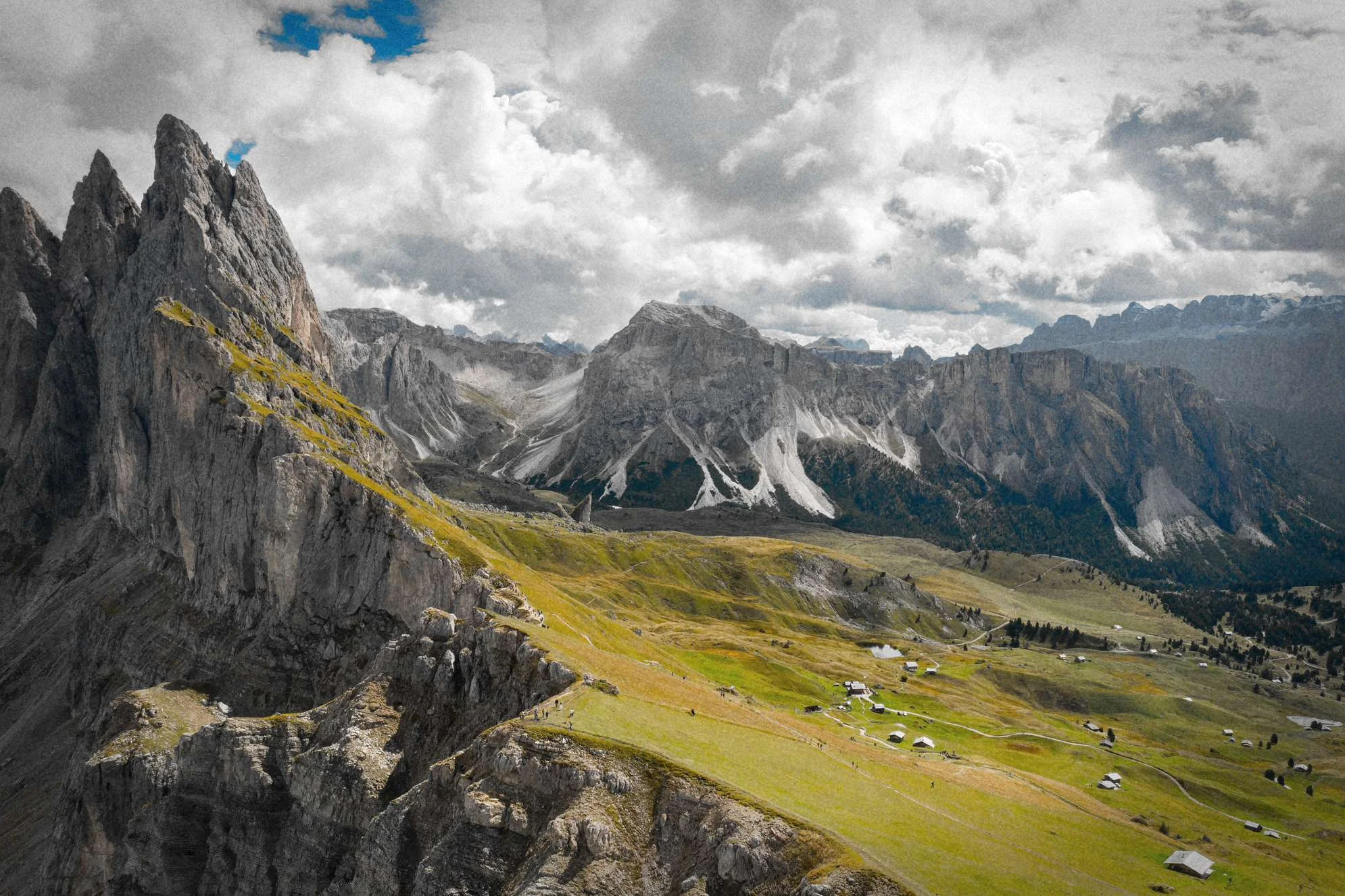
In the heart of the Dolomites: San Vigilio is so central that all of South Tyrol can be explored on day trips. In half an hour you are in Val Badia or Brunico, in an hour in Val Gardena, the Upper Puster Valley or Bressanone.
On this page you will find the finest destinations ordered by area: from Marebbe and Val Badia to Val Gardena and the Upper Puster Valley, the nature parks and the towns of South Tyrol. Driving times are from San Vigilio by car and rounded. We are happy to help you plan at reception.
Close by
Ladin culture, old churches and mountain meadows a few minutes from the hotel.
The “mother church” of the valley has been a parish since the 13th century and is still a place of pilgrimage. Its carved high altar with the miraculous Madonna dates from the plague year 1636.
The visitor centre explains how the Dolomites were formed and shows the cave bear from the Conturines.
History, language and legends of the Ladin people in a castle dating back to the 13th century.
Old grain mills line the stream, one of which can be visited. An easy walk in the mountaineering village of Longiarü.
The pilgrimage church from 1484 stands at over 2,000 metres right below the rock face of Sass dla Crusc. Reachable by lift in summer and winter.
The 2,875-metre Sass de Putia can be circled in four to five hours, one of the finest hikes in the Puez-Odle Nature Park.
Ladin Dolomite valleys
Ortisei, Santa Cristina and Selva lie at the foot of Sassolungo, Sella and Odle. Selva is about 1 h 10 away over the Gardena Pass.
The villages of upper Val Badia between Puez, Sella and Lagazuoi are known for their food, from starred restaurants to huts serving tirtlan. In winter about 130 km of slopes, and in December the World Cup giant slalom on the Gran Risa in La Villa.
Since the 17th century the people of Val Gardena have carved figures, nativity scenes and toys, once sold as far as America. The Museum Gherdëina in Ortisei tells the story.
With its steeply tilted ridges, Seceda is one of the best-known viewpoints in the Dolomites, looking out over the Odle group.
Sassolungo and the mighty Sella group shape the valley. A popular trail leads all the way round Sassolungo.
The World Cup downhill is 3.4 kilometres long and famous for the Camel Bumps, where racers fly far through the air.
The famous ski circuit around the Sella group over the Gardena, Sella, Pordoi and Campolongo passes, clockwise or anticlockwise. Included in the Dolomiti Superski pass.
A ski circuit around Val Gardena via Seceda, Col Raiser and the Alpe di Siusi. An underground train in Ortisei links the ski areas.
Up through the Edelweiss valley to the Puez hut at almost 2,500 metres, in the middle of a stone desert like the surface of the moon.
An easy circular walk over wide pastures with views of Sella, Marmolada and Sass dla Crusc, ideal for families.
In the Puster Valley
The colourful main street invites you to stroll. In the castle above the old town, the Messner Mountain Museum Ripa shows the life of mountain peoples around the world.
One of the finest castles in Tyrol, with 64 rooms, 24 of them wood-panelled. Visits by guided tour.
Three waterfalls plunge through a gorge, the upper one about 40 metres. A trail leads right past them.
Sexten Dolomites
Driving times from San Vigilio by car via the Furcia Pass, rounded.
A toll road from Misurina (about late May to October, online booking only) leads to the Auronzo hut, then a circular trail of about ten kilometres goes round the three rock towers, approx. 3–4 h. A quieter way up starts in the Fiscalina or Campo di Dentro valley near Sesto.
The turquoise lake below the Croda del Becco lies in the Fanes-Sennes-Prags Nature Park. From July to mid-September, access by car during the day requires an online booking. Early morning is the most beautiful time.
A wide alpine plateau at about 2,000 metres with views of the Croda Rossa. In summer the road is closed during the day and a bus goes up.
Gustav Mahler spent the summers of 1908 to 1910 here and wrote, among other works, “Das Lied von der Erde”. The Gustav Mahler Music Weeks take place every summer.
A walk round the lake takes less than an hour. On the southern shore lies a wetland with many water birds.
The village with its Romanesque collegiate church is the starting point of the Drava cycle path and one of the centres of the 3 Zinnen Dolomites ski area.
Nine, Ten, Eleven, Twelve and One: seen from Sesto, the peaks tell the time of day when the sun stands above them.
From San Candido along the Drava to Lienz in East Tyrol, almost entirely downhill. You return comfortably by train, bike included.
A varied cycle path through villages and meadows, ideal for families and e-bikes.
The front line of the First World War ran across Monte Piana. Its trenches and tunnels are now an open-air museum; a head torch helps.
About 115 km of slopes between Monte Elmo, Croda Rossa and Baranci, with views of the Sexten Dolomites. Part of Dolomiti Superski.
Seven nature parks · one national park
A quarter of the province protected: South Tyrol has seven nature parks and a share of the Stelvio National Park. They range from the downy-oak woods of the south to the glaciers of the Ortler. Four of the nature parks are part of the Dolomites UNESCO World Heritage Site.
The karst plateaus of Fanes, Sennes and Prato Piazza, Lake Braies and the cave of the Conturines bear. Visitor centre in San Vigilio.
The spires of the Odle group, the Puez plateau and Sass de Putia show the rock layers of the Dolomites like an open book. Visitor centre in Santa Maddalena, Val di Funes.
South Tyrol’s oldest nature park, with the Sciliar, the Santner and Euringer pinnacles and the towers of the Catinaccio (Rosengarten). Visitor centre in Siusi.
The Three Peaks, the Rocca dei Baranci and the Sesto sundial. Starting points are the Fiscalina and Campo di Dentro valleys. Visitor centre in the Dobbiaco cultural centre.
Glaciers, granite peaks and Lake Anterselva on the border with East Tyrol. The highest peak is the Dreiherrnspitze at 3,499 metres. Visitor centre in Campo Tures.
South Tyrol’s largest nature park above Merano, with the Spronser lakes and the Meran High Trail. Visitor centre in Naturno.
The only nature park entirely below 2,000 metres, with a mild climate, downy oaks and the greatest variety of species of all the parks. Visitor centre in Trodena.
One of the oldest national parks in the Alps, around the Ortler, the highest mountain in South Tyrol. Red deer, ibex and large glaciers. Visitor centres in Prato allo Stelvio, Trafoi and Martello, among others.
Day trips
The Augustinian abbey was founded in 1142. Library, church and one of the oldest wineries in the world still in operation.
The oldest town in Tyrol, with its cathedral, a cloister full of Gothic frescoes and the prince-bishops’ palace.
Above the artists’ town stands Säben monastery, once the seat of the bishops. The climb takes about 40 minutes.
Europe’s largest high alpine pasture below the Sciliar and Sassolungo. During the day you go up by cable car, as the road is closed to cars.
The Archaeological Museum is home to Ötzi, the Iceman, about 5,300 years old and found at the Tisenjoch in 1991. Afterwards, stroll under the arcades.
More than 80 garden landscapes on twelve hectares, open from April to early November.